Showing posts with label Exploring The Universe. Show all posts

Tuesday, September 16, 2008

2012: The End of the World?


2012 - Speculation and Theories involving the year 2012
- Eschatology and End Times Beliefs - 2012 The End? - An examination of the Mayans


The ancient peoples of Mesoamerica were of a vast interconnected empire, filled with rich art, education and destruction. The Maya were one of these tribes. Other than archaeological intrigue why are these people so studied? Their written language was based on pictographs, much like the ancient Egyptian hieroglyphs. Mayan culture was like most other native cultures.

The Maya had an understanding of mathematics and understood the value of zero long before its discovery in the Eastern parts of the world. Their understanding of numbers and astronomy gave us the Mayan calendars of the Long and Short Counts. So why does this calendar attract so much attention now? The Mayan calendar ends on the Gregorian calendar date of December 21, 2012, which most people believe is the total end of civilization, as we know it, while others believe it is simply a change of enlightenment in this current time. Many theories have sprung up about this end date, ranging from the laughable, to the religious, to the scientific.

There are actually three Mayan calendar systems, the 365-day Solar year, the 260-day Ritual year, and the 5,128 years of the World Time calendar. The Haab or Solar year was broken down into an 18 month plus five days cycle. 18 months of 20 days and the 5 soulless days which were thought to be of ill omen, kind of like 5 days of Friday the 13th. The Tzolkin (zol-KEEN) or Sacred Round was the 260-day ritual calendar was broken down by days, not months. This religious calendar was the basis on how the people, singly and collectively, went on with their day-to-day lives according to destiny.

August 11, 3.114 B.C. when the world began in, long count to Gregorian translation. This beginning date was reached by finding a point in future time (December 21 2012) and counting backwards, as theories go, which gives us a 5,126 year span, not including year zero. This is still one year off if year zero is included. The Mayan World calendar is a series of 5,128 years per span. What is the extra year? Were translations wrong somehow, it is quite possible.


So what is supposed to happen on this magical date of December 21, 2012?

One theory suggests that a Magnetic Field shift will occur around this time, that the calendar was based on pole shifts, which have occurred repetitively throughout the Earths history. The Maya, understanding the time periods between these shifts created their Long count calendar around them and come up with the final date for the next pole shift. But how would they know what to look for to expect another shift? How much time was supposed to pass between these shifts and how did they know it? Was there record passed down to them from long ago recounting a time when there was a prior pole shift so that mathematics could be used to predict the next one to come? Or did the ancients study a form of dendrochronology the study of climate changes by looking at tree rings. Others suggest a much more mythical or religious approach. December 21, 2012 is also the Winter Solstice, and provides us with a view that will not be seen again in any of our lifetimes. The Sun will conjunct the intersection of the Milky Way in the ecliptic, giving us view of the Sacred Tree as called by the Maya, giving us view of the Tree of Life. Both of these scenarios are quite possible, one scientific explanation, and one religious. What we still do not know, and probably will not know is what will happen after this end date until it actually occurs. A new dawn of enlightenment would be a step towards progression, in that mankind would become more aware of their surroundings and the impact that they have on the Earth as well as a higher intelligence and consciousness and a better mindset for helping their fellow man. Perhaps this is the end, when Mother Nature finally decides to shrug off the oppressiveness that has been created by the children and start anew. We may just end up living through another doomsday prophecy, going to work or school as usual, looking back on the prophecies and laughing them off. Peter may have cried wolf too often for our cynical minds.
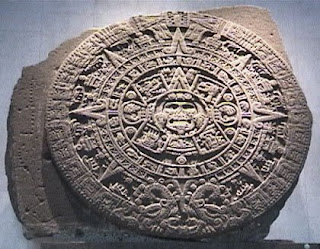
What is the Mayan Calendar?

The Maya calendar is a system of complex and highly developed calendars created by the Maya Civilization of pre-Columbian Mesoamerica. This series of calendars, includes a sacred 260-day calendar, called the Tzol'kin, a 365-day calendar called the Haab, and a 52-Haab cycle called the Calendar Round, which synchronised the Tzol'kin and Haab cycles.


The importance of time in the Maya culture

The Maya believed that time was cyclical instead of the western conception of linear time. This means that they thought that time repeated itself, so therefore, if they knew the past they could predict the future. By understanding time, they Maya could gain power over their world.

The Tzol’kin

The Tzol'kin calendar combines twenty day names with thirteen numbers to produce 260 unique days. It was used to determine the time of religious and ceremonial events and for divination.

Divination

The Maya believed that each day of the Tzol’kin had a character that influenced events. The Maya had a shaman-priest, whose name meant day keeper, that read the Tzol’kin to predict the future. When a child was born, the day keeper would interpret the Tzol’kin cycle to predict the baby’s destiny. For example, a child born on the day of Ak’abal was thought to be feminine, wealthy, verbally skillful, and possibly a liar, cheat or complainer. The birthday of Ak’abal was also thought to give the child the ability to communicate with the supernatural world, so he or she might become a priest shaman or a marriage spokesman. In the Maya highlands, babies were even named after the day they were born on.

Origin of the Tzol’kin

The exact origin of the Tzol’kin is not known, but there are several theories. One theory is that the calendar came from mathematical operations based on the numbers thirteen and twenty, which were important numbers to the Maya. The number twenty was the basis of the Maya counting system, taken from the number of human fingers and toes. (See Maya numerals). Thirteen symbolized the number of levels in the Upperworld where gods lived. The numbers multiplied together equal 260. Another theory is that the 260-day period came from the length of human pregnancy. It is postulated that midwives originally developed the calendar to predict babies’ expected birth dates.

The Haab

The Haab was the Maya solar calendar made up of eighteen months of twenty days each and a five day month at the end of the year known as Wayeb or Uayeb that was called "the nameless days." Victoria Bricker estimates that the Haab was first used around 550 B.C.E. with the starting point of the winter solstice. The Haab was the foundation of the agrarian calendar and the month names are based on the seasons and agricultural events. For example the thirteenth month, Mac, may refer to the end of the rainy season and the fourteenth month, Kankin, may refer to ripe crops in the fall.

Wayeb

The five nameless days at the end of the calendar called Wayeb were thought to be a dangerous time. Lynn Foster writes that, "During Wayeb, portals between the mortal realm and the Underworld dissolved. No boundaries prevented the ill-intending deities from causing disasters." To ward off these evil spirits, the Maya had customs and rituals they practiced during Wayeb. For example, people avoided leaving their houses or washing or combing their hair.

The long count calendar

There was also a Long Count calendar which started at [0.0.0.0.0] (with Maya record) on August 11, 3114 BC according to the "Goodman, Martinez-Hernandez, and Thompson" correlation (nicknamed "GMT"), the most widely accepted correlation between the Maya and Gregorian calendar. This cycle is 1,872,000 days in length, terminates on the Winter Solstice of (December 21) AD 2012 and is designated [13.0.0.0.0] or [0.0.0.0.0], since the Maya believed that time is somehow periodical. Another widely-used correlation, that of Lounsbury, correlates the start-day to August 13, 3114 BC and the terminal date to December 23, AD

The end of the world?

The turn of the great cycle is conjectured to have been of great significance to the Maya, but does not necessarily mark the end of the world. According to the Popol Vuh, a sacred book of the Maya, they were living in the fourth world. The Popal Vuh describes the first three worlds that the gods failed in making and the creation of the successful fourth world were men were placed. They Maya believed that the fourth world would end in catastrophe and the fifth and final world would be created that would signal the end of mankind.

The Venus cycle

Another important calendar for the Maya was the Venus cycle. The Maya were excellent astronomers, and could calculate the Venus cycle with only a two-hour margin of error. The Maya were able to achieve such accuracy by careful observation over many years. The Venus cycle was especially important because the Maya believed it was associated with war and used it to divine good times for coronations and war. Maya rulers planned for wars to begin when Venus rose. The Maya also tracked other planet’s movements such as Mars, Mercury, and Jupiter.


The Mayan Calendar Explained:


Mayan 2012 Secrets Revealed pt1/18


2012 Predictions of Galactic Alignment of the Ancient Mayans


2012 Galactic Alignment Scientific Facts on What Will Happen


Bookmark and Share

Saturday, September 13, 2008

This Machine Is the Future of Physics

More on the world's greatest experiment in physics!

By Alexis Madrigal
09.10.08

The Large Hadron Collider, the world's most-powerful atom smasher, is an engineering marvel constructed hundreds of feet underground.

Composed of millions of individual pieces, the collider uses more than 9,000 magnets to accelerate two beams of protons to almost the speed of light. When the beams collide, they shatter into their constituent parts, allowing scientists to glimpse particles that don't exist in standard environments.

The hard part, actually, becomes finding the rare and important particles among all the normal ones created in smashing atoms. Toward that end, physicists designed cathedral-size experimental chambers that feature some of the most-precise measurement tools ever created by man. One scientist described them as 150-megapixel digital cameras taking snapshots 600 million times a second.

In this gallery, we take you on a quick tour of the world's most complex scientific machine.

The Globe of Science and Innovation marks the site of the 17-square-mile underground Large Hadron Collider, the biggest physics experiment in the world, which starts smashing atoms ON Sept. 10 2008. (Photo: BUL Collection)


The Globe of Innovation at CERN, the world's largest particle physics laboratory. CERN has 20 European members and 7,931 scientists and engineers.( Photo: CERN)


Taken inside ATLAS, this image shows the Hadronic Endcap Liquid Argon Calorimeter. The calorimeter can measure the loss of energy from a collision, which could be caused by the creation of dark matteR. (Photo: Roy Langstaff)

The ALICE detector, a piece of which is pictured here, will be used in experiments designed to mimic the moments just after the Big Bang. Cosmologists hope to see how the superheated plasma present at the beginning of creation cooled into the particles we see in the world today. More than 1,000 scientists have collaborated on the ALICE experiment.(Photo: Maximilien Brice).

The ATLAS experimental chamber, pictured here, is 150-feet long, 82-feet high and weighs more than 15,000 pounds. It's the largest detector at the LHC and the handiwork of more than 1,700 scientists.(Photo: Claudia Marcelloni)

Unlike most of the other experiments at the LHC, the Compact Muon Solenoid was built above ground and then lowered into place in 15 sections. Here, the last section is brought into place for reassembly underground.(Photo: Maximilien Brice)

One of the final pieces is inserted into the Compact Muon Solenoid, or CMS, one of the largest detectors at the Large Hadron Collider. Built around an enormous solenoid magnet that generates a magnetic field 100,000 times that of the Earth, the CMS will be in on the hunt for the Higgs boson, dark matter and extra dimensions. More than 2,000 scientists from 37 countries will work with the CMS.(Photo: Maximilien Brice)

The Guardian newspaper once wrote, "Particle physics is the unbelievable in pursuit of the unimaginable." Here, we see the unbelievable ATLAS Magnet Toroid Endcap rolling through the streets of the LHC campus. The Endcap is one of three major magnets in the detector's system. (Photo: Claudia Marcelloni)

Here, a technician works on one of the major experimental areas within the Large Hadron Collider: the ATLAS all-purpose particle detector. ATLAS will be used to search for the long-postulated Higgs boson as well as for clues about dark matter and the nature of the universe.(Photo: Roy Langstaff)

The Silicon Pixel detector, pictured under construction, of the ALICE detector recorded the very first particle tracks produced by the LHC back on June 15 during a test run of the machine.(Photo: Maximilien Brice)

Scientists watch the second and final test of the LHC's beam-synchronization systems on Aug. 22.(Photo: Maximilien Brice)

The European Organization for Nuclear Research, which goes by its French acronym, CERN, is home of the Large Hadron Collider, located on the border between Switzerland and France northwest of Geneva.(Courtesy CERN)


Bookmark and Share

Friday, September 12, 2008

Scientists Start World's Biggest Physics Project

I find this piece of news to be truly incredible - sheer advancement in science! If man could actually prove the reality of the 'big bang' theory and thereby confirm the origin of the universe, what next? Will religion be affected? ......

Scientists Start World's Biggest Physics Project:
(D Ravi Kanth / Geneva September 11, 2008, 5:14 IST)
(Business Standard)

Experiments using the Large Hadron Collider could unlock secrets about the universe and its origins. Scientists and engineers today celebrated the successful steering of a beam of protons around a 27-km tunnel that houses the world’s largest collider at the European Nuclear Research Organization situated on the Geneva-France countryside, paving the way for a series of scientific experiments to reveal the early building blocks in the formation of the universe.

“There it is,” Lyn Evans, the leader of Large Hadron Collider project, declared proudly when two white dots of proton beam flashed on the computer screen, amid exultant scenes of triumph in crossing the first step of what is going to be the mother of all experiments in the arena of particle physics.

“It is a fantastic moment,” said Evans, the former British military commander. “We can now look forward to a new era of understanding about the origins and evolution of the universe.”

It required a Herculean effort to ensure that thousands of individual elements that went into the construction of the largest particle collider work in harmony and timings have to be synchronized to under a billionth of a second, said Dr Vinod Chohan, leader of CERN-India collaboration division.

India’s scientific and engineering personnel played a significant role in the construction of the LHC project, especially in providing 1,706 assemblies of cryomagnets that are essential for acceleration functions in the LHC. “Testing and qualification of the magnets at cryogenic temperature is a prerequisite for the installation of the Large Hadron Collider,” said Dr Chohan, suggesting that the Indian assistance is invaluable.

“We are in an era where Indian physicists are full-fledged members of the LHC experiment,” said Chohan, the Indian-origin British physicist.

“It has been a fascinating and rewarding experience for us,” said Vinod C Sahni, director of the Raja Ramanna Centre for Advanced Technology in Indore. “Overall, Indian contribution to LHC accelerator is Swiss Franc 43 million (about $42.5 million) containing a variety of components and systems besides skilled manpower support for magnetic tests and measurements and help in commissioning LHC subsystems.”

Today’s experiment is a first step to ensure that the proton beams are captured and retained well in heavy magnetic fields that dominate the tunnel. After several experiments of steering the beams both in clockwise and anti-clockwise directions, the ground will be prepared for the collision of protons in the coming months. “The collision and subsequent experiments will reveal the moment when the first building blocks of the universe began to take shape after the big bang,” he argued. “The LHC is a discovery machine,” said CERN’s Director General Robert Aymar, “Its research programme has the potential to change our view of the universe profoundly.”

Once the machine’s acceleration systems are brought into play to create conditions of 7,000 GeV, a measure for huge energy that will be generated, and the conditions of collision will be created, scientists will study the four experiments that are being carried out. The LHC, which is estimated at about $9 billion and has attracted researchers from around 80 countries, will provide ideal conditions for a collision of proton particles at the speed of light, whizzing 11,000 times a second around the tunnel.

The CERN’s four experiments are expected to throw more light on “dark matter”, antimatter and other dimensions. The CMS experiment will provide evidence of the Higgs Boson, which is referred to as the God’s particle, that provides mass to all other particles, and thus to the matter that makes up the universe. According to the theory, particles acquire their mass through interactions with an all-pervading field carried by the Higgs.

The universe is made up of 4 per cent ordinary matter, 23 per cent dark matter and 73 per cent dark energy. The LHC is expected to throw light on this mysterious stuff called the dark matter and dark energy.

Big bang effort:

Following are some facts about the Big Bang and CERN’s particle-smashing experiment:

WHAT IS CERN:
CERN, the European Organisation for Nuclear Research, is one of the world's largest and most respected centres for scientific research
Its business is fundamental physics, finding out what the Universe is made of and how it works
Founded in 1954, CERN now has 20 member states, plus six actively participant observers including the United States and Russia

WHAT IS THE BIG BANG?
The name “Big Bang” was coined in 1949 by British scientist Fred Hoyle. It says the universe expanded rapidly from a highly compressed primordial state, which resulted in a significant decrease in density and temperature
It is the only explanation of an expanding universe, which shows how stars and planets came together out of the primeval chaos that followed

RECREATING THE BIG BANG:
The final tests involved pumping a single bunch of energy particles from the project's accelerator into the 27-km beam pipe of the collider and steering them counter-clockwise around it for about 3 km
The collider aims to simulate conditions milliseconds after the “Big Bang”, which created the universe around 13.7 billion years ago.
The collisions, in which both particle clusters will be travelling at the speed of light, will be monitored on computers at CERN and laboratories around the world by scientists looking for, among other things, a particle that made life possible.


Bookmark and Share

Google
The Hunger Site
The Hunger Site

Relax - Click & Feed The Fish

Watch how they eagerly swim toward your mouse hoping that you’ll drop a few flakes of food for them.
Thank You For Being My Friend
Friendship from Family Friend Poems
Friendship Poems

FRIENDS ARE LIKE FLOWERS